

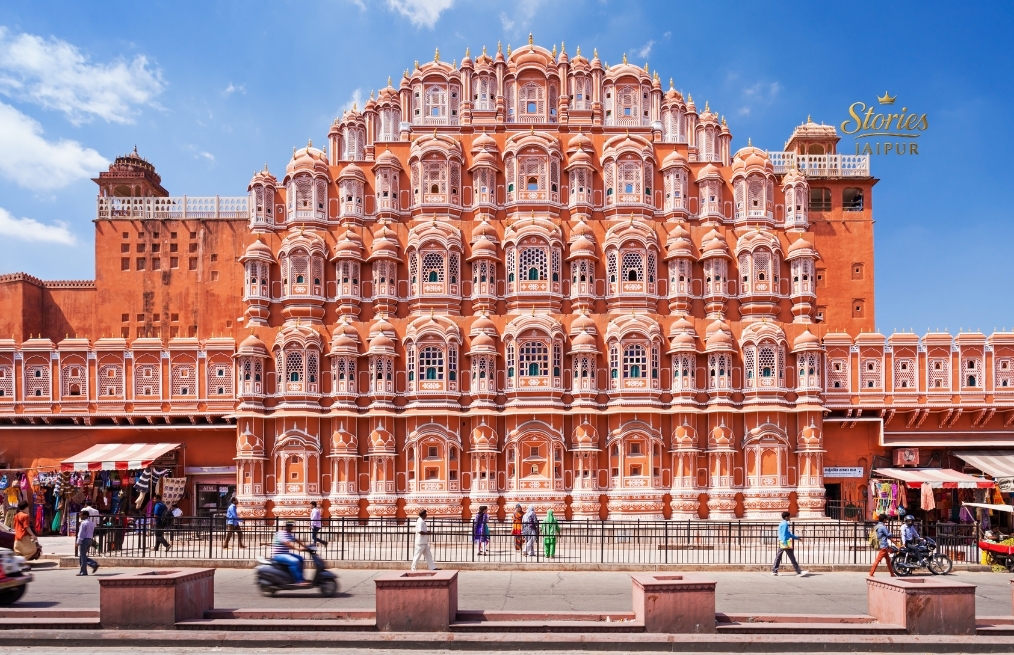
The Hawa Mahal, literally meaning “Palace of Winds,” stands as one of Jaipur’s most distinctive and beloved architectural marvels. This five-story honeycomb-like structure, built in 1799 by Maharaja Sawai Pratap Singh, is an exquisite testament to Rajputana artistry and ingenuity. More than just a beautiful facade, the Hawa Mahal served a unique and crucial purpose for the royal ladies of its time.
A Veil of Stone for Royal Gaze
The primary function of the Hawa Mahal was to allow the women of the royal household to observe daily life, festivals, and processions on the streets below without being seen themselves. In an era when purdah (a practice of veiling and seclusion) was strictly observed, the palace’s 953 small jharokhas (windows) provided the perfect solution. These intricately latticed windows, each with its miniature arch and carved sandstone, offered privacy while allowing glimpses of the bustling world outside. From behind these delicate screens, the queens and princesses could partake in the vibrant energy of the city, a luxury not afforded to them otherwise.
Architectural Brilliance and Natural Air-Conditioning
Beyond its social function, the Hawa Mahal is a marvel of architectural design, particularly in its clever use of natural ventilation. The numerous windows, combined with the strategic placement of the palace, created a Venturi effect, allowing cool air to circulate through the interior. This ingenious design served as an early form of air conditioning, providing a refreshing escape from the scorching Rajasthani heat, especially during the summer months. The intricate jali work (stone latticework) not only added to the aesthetic appeal but also played a crucial role in regulating airflow and light within the palace.
A Symbol of Jaipur’s Rich Heritage
The Hawa Mahal is an integral part of the City Palace complex, though it stands slightly apart. Its striking pink and red sandstone facade, a common feature of Jaipur’s architecture, blends seamlessly with the surrounding historical structures. The palace’s unique blend of Rajput and Mughal architectural styles is evident in its arched entrances, domed pavilions, and delicate carvings. Today, the Hawa Mahal is not just a historical monument but a vibrant symbol of Jaipur’s rich cultural heritage and a major tourist attraction. Visitors can explore the narrow passages and climb to the upper floors, experiencing firsthand the unique perspective once enjoyed by the royal ladies and marvelling at the innovative design that continues to captivate architects and historians alike.
Preserving a Legacy
Efforts are continuously made to preserve the Hawa Mahal’s delicate structure and ensure its longevity. The Archaeological Survey of India oversees its maintenance, working to protect its intricate carvings and restore any damage caused by time or environmental factors. The Hawa Mahal stands as a magnificent reminder of a bygone era, where beauty, privacy, and ingenious engineering converged to create a truly iconic landmark. Its royal breezes continue to whisper tales of a fascinating past, inviting all who visit to imagine the lives lived behind its iconic facade.
