

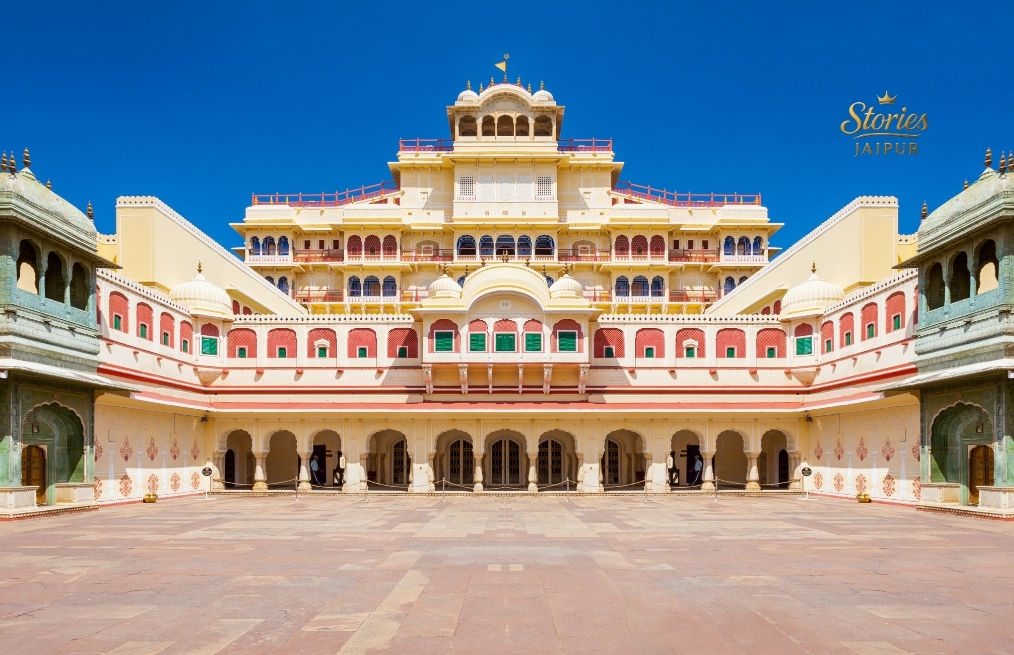
Nestled in the heart of the Pink City, the City Palace of Jaipur stands as a remarkable testament to the fusion of royal heritage and modern elegance. This sprawling complex, established concurrently with the city of Jaipur by Maharaja Sawai Jai Singh II in 1727, remains a vibrant symbol of the Kachwaha Rajput clan’s enduring legacy. It’s a living museum, where the descendants of the erstwhile rulers still reside in a private section, offering a unique glimpse into centuries of continuous royal tradition.
A Masterpiece of Mughal and Rajput Fusion
The City Palace is a breathtaking architectural marvel, seamlessly blending Rajput, Mughal, and even some European styles. Its various courtyards, gardens, and buildings showcase exquisite craftsmanship, featuring intricate carvings, delicate frescoes, and stunning mirror work. The initial layout was meticulously planned by the ancient Indian architectural treatise, Vastu Shastra, by Vidyadhar Bhattacharya, the chief architect of Jaipur. Over generations, successive rulers added their embellishments, creating the diverse and captivating complex we see today.
Glimpses into Royal Life
The palace complex is divided into several sections, each offering a distinct experience. Upon entering through one of the grand gates, such as Virendra Pol or Udai Pol, visitors are greeted by majestic courtyards. The Mubarak Mahal, also known as the “Welcome Palace,” once served as a reception hall for dignitaries and now houses the Maharaja Sawai Man Singh II Museum, showcasing a rich collection of royal costumes, textiles, and artefacts. Here, you can marvel at ceremonial robes, intricate pashmina shawls, and even the enormous clothes of Maharaja Sawai Madho Singh I, a testament to his impressive stature.
Adjacent to the Mubarak Mahal is the Diwan-i-Khas (Hall of Private Audience), a stunning marble-pillared hall that once hosted intimate meetings. It famously displays two enormous silver urns, recognised by the Guinness Book of World Records as the largest silver vessels in the world, which Maharaja Madho Singh II used to carry holy Ganga water to England. The Diwan-i-Aam (Hall of Public Audience), on the other hand, was where the king addressed his subjects, now exhibiting a collection of ancient manuscripts, Rajput weaponry, and exquisite miniature paintings.
The Dazzling Pritam Niwas Chowk and Chandra Mahal
Perhaps the most visually captivating area of the City Palace is the Pritam Niwas Chowk, also known as the “Courtyard of the Beloveds.” This central courtyard is famous for its four intricately painted gates, each representing a season and adorned with vibrant motifs. The Peacock Gate, symbolising autumn, is particularly renowned for its dazzling peacock mosaics. The Rose Gate (winter), Lotus Gate (summer), and Green Gate (spring) complete this artistic quartet, offering a photographer’s delight.
Towering above the complex is the magnificent Chandra Mahal (Moon Palace), a seven-storied private residence of the current royal family. While the upper floors remain private, the ground floor is open to visitors, displaying antique furniture, rare manuscripts, and ornate chandeliers, providing a rare glimpse into the opulent lifestyle of the royals.
A Living Heritage
The City Palace is more than just a historical monument; it’s a living heritage site. The current royal family actively participates in its upkeep and continues to host traditional festivals and ceremonies within its premises. The palace’s enduring charm lies in its ability to seamlessly blend its rich past with a vibrant present, offering every visitor a profound journey into the heart of Jaipur’s royal legacy.
