

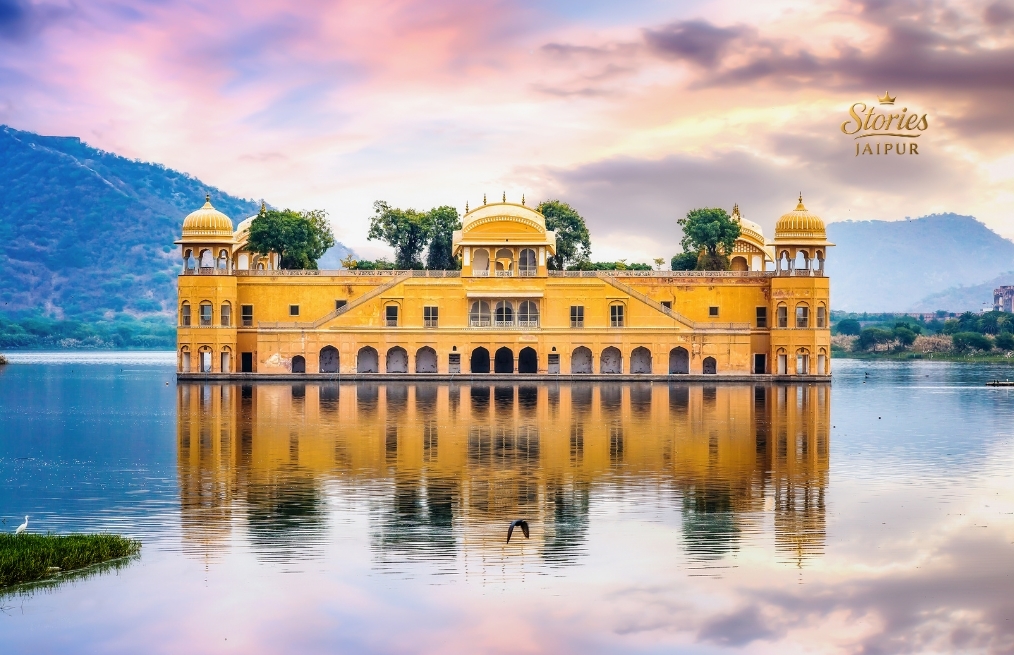
Floating serenely amidst the tranquil waters of Man Sagar Lake, the Jal Mahal, or “Water Palace,” is one of Jaipur’s most iconic and enigmatic architectural wonders. This exquisite palace, believed to have been built or significantly renovated by Maharaja Sawai Pratap Singh in the late 18th century, embodies a remarkable fusion of Rajput and Mughal architectural styles. While its true purpose remains somewhat debated – perhaps a royal hunting lodge for duck shooting, a summer retreat, or simply a pleasure palace – its unique setting, with four of its five stories submerged beneath the lake’s surface when the water is full, gives it an ethereal and almost mirage-like quality. Today, the Jal Mahal stands as a captivating symbol of Jaipur’s royal heritage and its enduring charm.
An Architectural Marvel Amidst the Waves
The design of the Jal Mahal is a testament to the ingenuity of its builders. Constructed in red sandstone, the palace features a rectangular shape with four ornate chhatris (domed pavilions) at its corners and a larger one on the central terrace. The intricate carvings, arched doorways, and delicate jali (lattice) work showcase the meticulous craftsmanship characteristic of the era. What makes it truly unique is its submerged foundation. During the monsoon season, when the Man Sagar Lake is at its fullest, only the top floor of the palace remains visible, appearing to float gracefully on the water. This architectural feat not only makes it visually stunning but also hints at advanced engineering skills to ensure its stability and durability in a constantly changing water environment.
The Revival of Man Sagar Lake and Its Ecosystem
The story of Jal Mahal is intrinsically linked to the Man Sagar Lake. Over centuries, due to neglect and environmental factors, the lake’s condition deteriorated significantly. However, in the late 20th and early 21st centuries, a monumental restoration project was undertaken to revive the lake’s ecosystem and preserve the palace. This ambitious endeavor involved desilting the lake, improving water quality, and creating a healthier habitat for aquatic life and migratory birds. The successful restoration has not only enhanced the beauty of the Jal Mahal but has also transformed the lake into a thriving ecological zone, attracting various species of birds and enhancing the overall biodiversity of the area. This ecological revival has added another layer of significance to the palace, making it a symbol of environmental stewardship.
Mystique and Inaccessibility
Despite its immense popularity, the interior of Jal Mahal is generally not accessible to the public. This inaccessibility only adds to its mystique and allure. Visitors can admire the palace from the lakeside promenade, taking in its serene beauty against the backdrop of the Nahargarh hills. The calm waters often reflect the palace, creating perfect mirror images that are a delight for photographers. The view is particularly enchanting during sunrise and sunset, when the changing light bathes the palace in a golden glow, transforming it into a truly magical spectacle. While one cannot explore its opulent rooms, the very presence of the Jal Mahal, seemingly disconnected from the bustling city, evokes a sense of tranquility and wonder.
A Beacon of Jaipur’s Romantic Charm
The Jal Mahal is more than just a historical monument; it is a beacon of Jaipur’s romantic charm. Its picturesque setting has made it a favorite backdrop for films, photoshoots, and leisurely strolls. The story of its creation, its architectural brilliance, and its unique relationship with the lake make it a compelling subject for anyone visiting Jaipur. It stands as a testament to the aesthetic sensibilities of the Rajput kings who envisioned and brought to life such an extraordinary structure. The Jal Mahal continues to cast its spell, inviting all who gaze upon it to ponder its secrets and appreciate its timeless beauty.
