

Welcome to Jodhpur, famously known as the “Blue City“ of India. Set against the stark landscape of the Thar Desert, the city is a captivating spectacle of azure-blue houses that create a striking contrast with their surroundings. Founded in 1459 by Rao Jodha, this city is also called the “Sun City” for the bright, sunny weather it enjoys year-round. Let’s explore the seven majestic marvels that define Jodhpur’s royal grandeur and timeless charm.
1. The Imposing Mehrangarh Fort
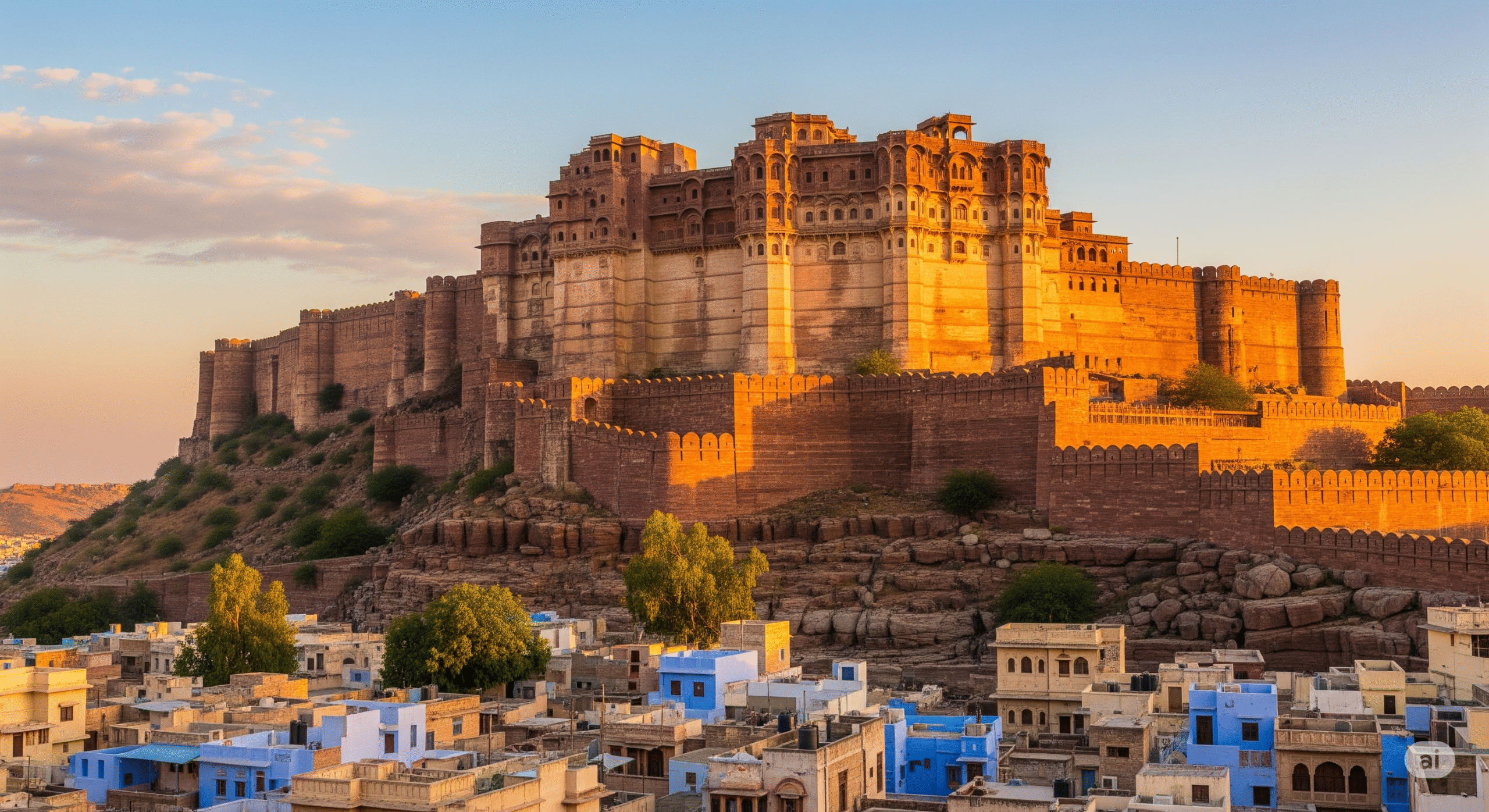
Towering 410 feet above the city, Mehrangarh Fort is one of India’s largest and most magnificent forts. Its sheer, imposing walls seem to rise organically from the cliff they stand upon. The author Rudyard Kipling aptly called it “the work of giants.”
Inside, you’ll find a series of beautiful palaces, grand courtyards, and an outstanding museum showcasing royal artifacts. The fort’s ramparts offer breathtaking panoramic views of the blue-hued city below, a sight that will stay with you forever.
2. Jaswant Thada – The Taj Mahal of Marwar
Just a short walk from Mehrangarh Fort lies Jaswant Thada, an intricate marble cenotaph. Built in 1899, this stunning memorial is often called the “Taj Mahal of Marwar.”
It is constructed from thinly polished sheets of white marble that emit a warm, ethereal glow when illuminated by the sun. Surrounded by a tranquil garden and a serene lake, it’s a peaceful and picturesque spot to visit.
3. Umaid Bhawan Palace – A Royal Residence
The Umaid Bhawan Palace is a symbol of new Jodhpur and stands as one of the world’s largest private residences. This grand yellow sandstone palace seamlessly blends eastern and western architectural influences, particularly Art Deco.
A part of the palace is still home to the former royal family, another section has been converted into a luxurious heritage hotel, and the third part houses a wonderful museum that chronicles the history of the Jodhpur royals.
4. The Old Blue City – A Labyrinth of Azure Lanes
To truly experience Jodhpur, you must wander through the old city, particularly the Brahmpuri area. Here, you’ll find a charming labyrinth of winding lanes lined with houses painted in vivid shades of blue.
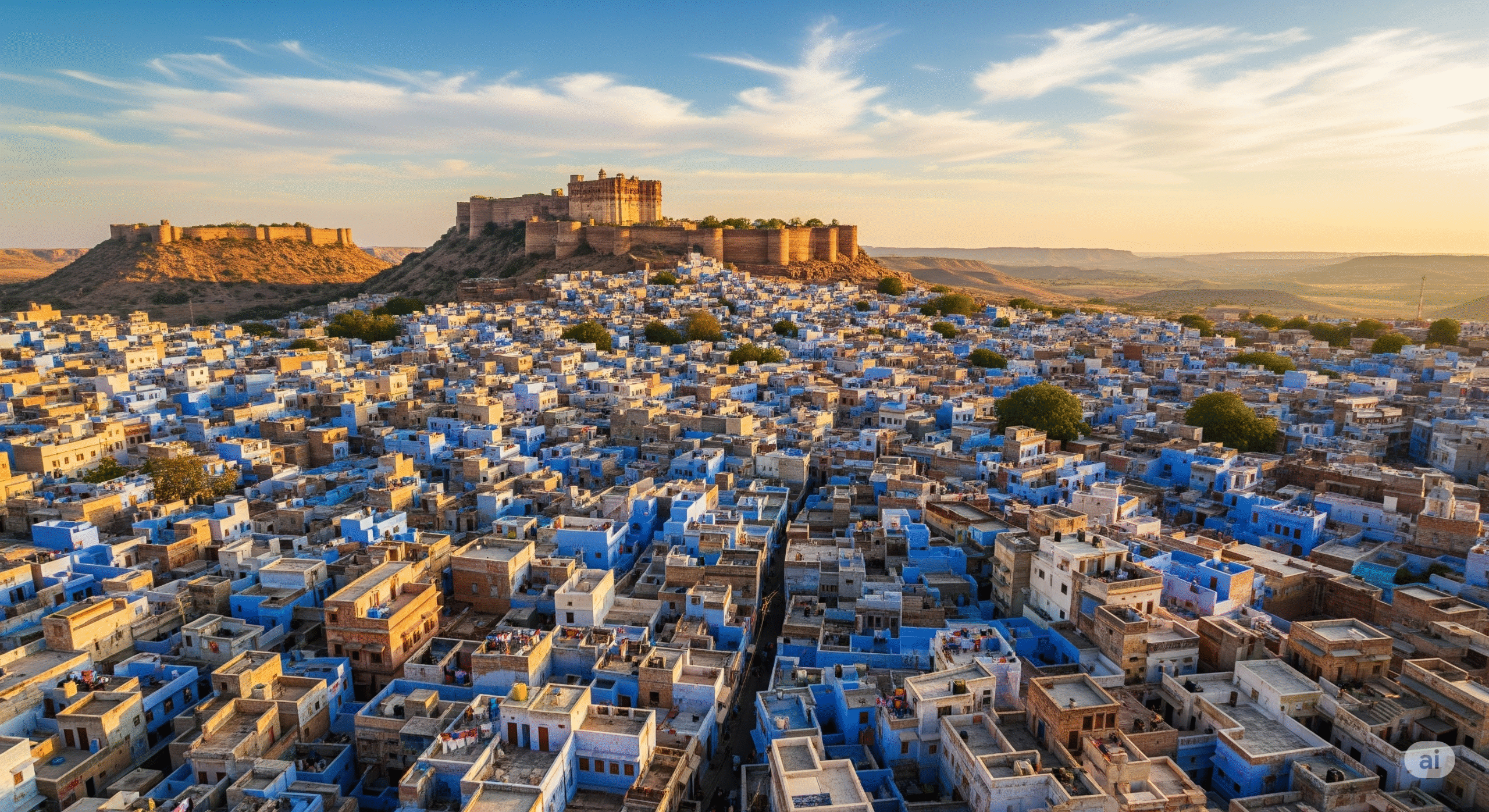
The reason for the blue colour is debated—some say it was to repel termites, while others believe it helped keep the houses cool. Walking through these streets, you get a real sense of local life, culture, and history.
5. Clock Tower (Ghanta Ghar) & Sardar Market
The Clock Tower, or Ghanta Ghar, is a prominent landmark in the old city. Surrounding it is the vibrant Sardar Market, a traditional Rajasthani bazaar that is a feast for the senses.
Here, you can shop for everything from colourful textiles and leather goods to spices and handicrafts. The bustling atmosphere, lively sounds, and rich aromas make this market the energetic heart of Jodhpur.
6. Mandore Gardens – A Historic Retreat
Before Jodhpur was established, Mandore was the capital of the Marwar region. Today, the Mandore Gardens are home to a collection of ancient temples and cenotaphs (dewals) of former rulers.
Unlike the typical chhatri-shaped cenotaphs found elsewhere in Rajasthan, these are built like Hindu temples. The beautiful gardens and their fascinating history offer a quiet and serene escape.
7. Toorji Ka Jhalra – The Ancient Stepwell
Discover a piece of Jodhpur’s history at Toorji Ka Jhalra, an intricate stepwell built in the 1740s. After years of neglect, this architectural wonder has been beautifully restored.
The stunning geometric patterns of the steps leading down to the water are a sight to behold. It has now become a popular gathering spot for locals and tourists alike, offering a cool respite from the desert heat.
