

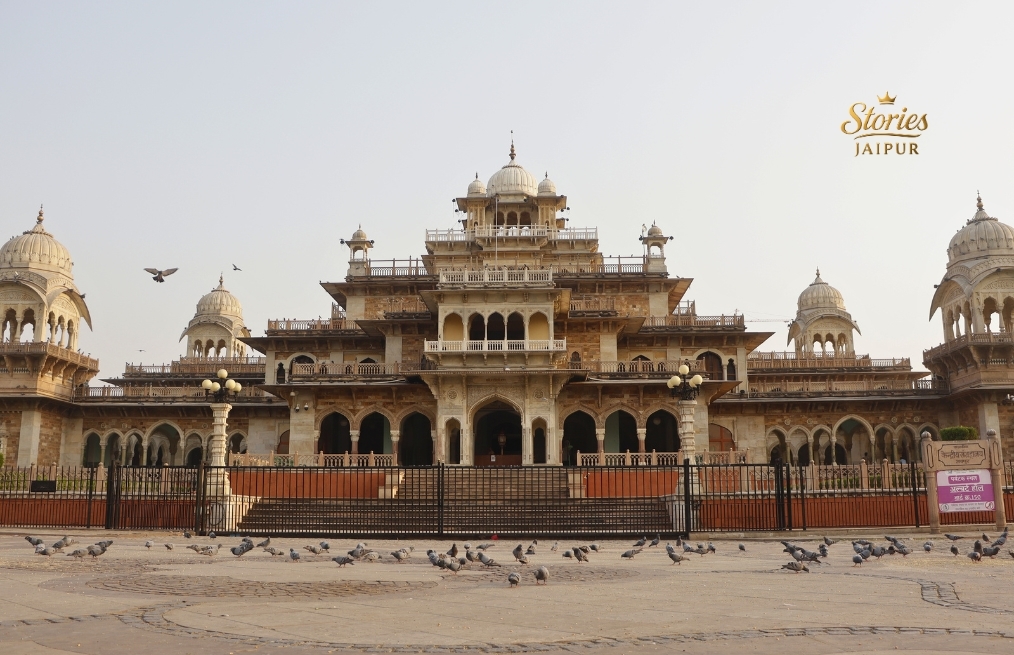
Standing majestically in the Ram Niwas Garden, the Albert Hall Museum is not just Jaipur’s oldest museum but also an architectural masterpiece that captivates visitors with its Indo-Saracenic design and vast collection. Named after King Edward VII (Albert Edward), the Prince of Wales, who laid its foundation stone in 1876, the museum was opened to the public in 1887. Designed by Samuel Swinton Jacob, its striking edifice of pink sandstone blends elements of English, Mughal, and Rajput architecture, making it a visual delight even before one steps inside. More than just a repository of artefacts, the Albert Hall Museum offers a profound glimpse into Rajasthan’s rich artistic heritage and history.
An Architectural Jewel and Historical Landmark
The design of the Albert Hall Museum is as much a part of its appeal as its exhibits. Its intricate facades, minarets, domes, and arcades are adorned with detailed carvings and motifs that reflect a blend of diverse cultural influences. Conceived initially as a town hall, its purpose was later transformed into a museum by Maharaja Sawai Madho Singh II, who recognised the need for a central repository for the region’s artistic and historical treasures. The museum’s strategic location in the heart of a lush garden further enhances its aesthetic appeal, providing a serene backdrop for this magnificent structure.
Diverse Collections Revealing Rajasthan’s Spirit
The Albert Hall Museum houses an extensive and incredibly diverse collection of artefacts, arranged across various galleries, each telling a unique story of Rajasthan’s past and artistic prowess.
- Diorama Gallery: This section features fascinating miniature models that depict traditional Rajasthani festivals, costumes, and daily life, providing a vivid snapshot of the region’s cultural fabric.
- Clay Art Gallery: This gallery showcases exquisite clay models from the 19th century, featuring figures of various castes and tribes from Rajasthan, alongside traditional Rajasthani musical instruments, offering insight into the diverse communities of the state.
- Carpet Gallery: Home to a remarkable collection of Persian and Indian carpets, some dating back to the 17th century, including a rare Persian garden carpet. The intricate designs and vibrant colours are a testament to the masterful weaving techniques of the era.
- Jewellery Gallery: A dazzling display of traditional Rajasthani jewellery, highlighting the elaborate craftsmanship and the use of precious stones and metals that were favoured by the royal families and common folk alike.
- Musical Instruments Gallery: Features a wide array of traditional Indian musical instruments, offering a melodious journey through the sounds of Rajasthan’s folk and classical traditions.
- Pottery Gallery: Exhibits a range of pottery, from delicate glazed ceramics to robust terracotta ware, reflecting the functional and artistic evolution of pottery in the region.
- Sculpture Gallery: Houses a significant collection of sculptures, including ancient metal and stone figures from various periods, as well as a notable Egyptian mummy, which is a key attraction and a rare sight in India.
- Arms and Armour Gallery: Displays an impressive array of weapons, including swords, daggers, shields, and firearms, once used by Rajput warriors, providing a glimpse into the martial history of Rajasthan.
Preserving and Presenting a Rich Legacy
The Albert Hall Museum plays a vital role in preserving and presenting Rajasthan’s rich cultural and artistic legacy. It serves as an educational hub, attracting scholars, artists, and tourists eager to delve into the intricacies of Indian art and history. The museum also hosts various cultural events and exhibitions, further engaging the community and promoting an appreciation for heritage. Its nighttime illumination adds another layer of magic, transforming the museum into a beacon of light that highlights its architectural grandeur.
A Journey Through Time
A visit to the Albert Hall Museum is more than just a tour; it’s a journey through time, allowing one to connect with the artistic soul and historical depth of Rajasthan. From ancient artefacts to intricate crafts, every exhibit tells a tale, making it an indispensable stop for anyone wishing to truly understand the vibrant spirit of Jaipur and its enduring royal past.
