

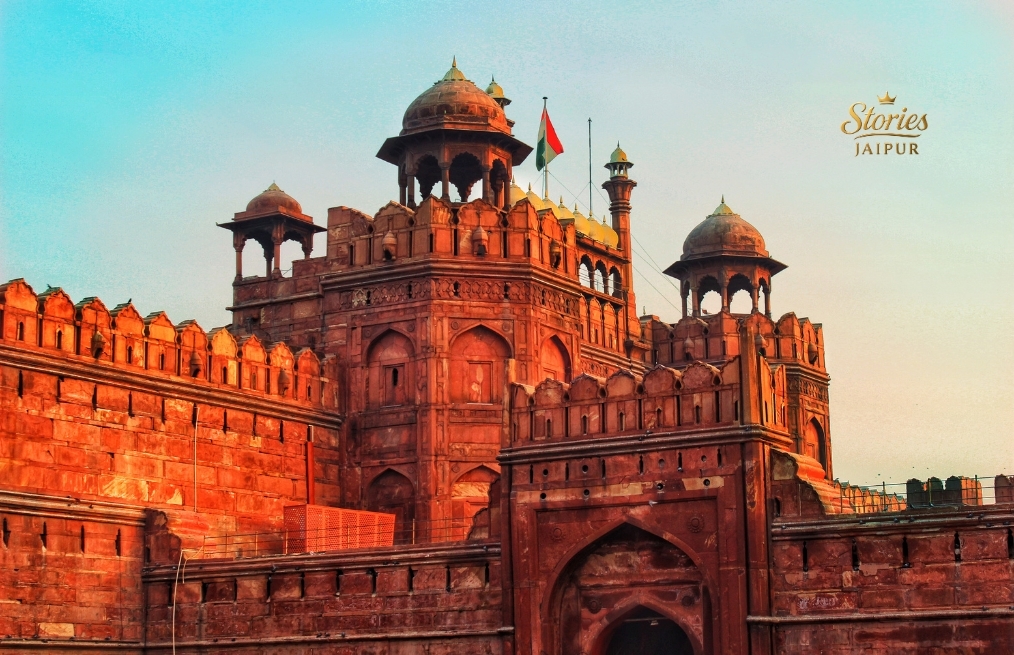
Perched majestically on the Cheel ka Teela (Hill of Eagles) in the Aravalli range, Jaigarh Fort stands as a colossal testament to Rajput military engineering and strategic brilliance. Built in 1726 by Maharaja Sawai Jai Singh II, this imposing fortress was primarily constructed to protect the Amer Fort and its palace complex. Unlike Amer, which served as a royal residence, Jaigarh was conceived purely as a military stronghold, its robust walls and formidable defences safeguarding the kingdom’s wealth and its most prized possession—a colossal cannon. Today, Jaigarh Fort invites visitors to explore its grand architecture and discover the fascinating stories behind its hidden treasures.
An Impenetrable Fortress and Secret Passages
Jaigarh Fort’s design emphasises impregnability. Its thick walls, spanning an impressive 3 kilometers, are punctuated by strong bastions, watchtowers, and cannon slits, making it nearly impossible for invaders to breach. The fort also boasts an elaborate system of rainwater harvesting and storage, ensuring self-sufficiency even during prolonged sieges. One of its most intriguing features is the extensive network of covered walkways and secret passages that connect different parts of the fort, even leading down to Amer Fort, providing a vital escape route for the royal family in times of crisis. These hidden tunnels add an aura of mystery and intrigue to the fort’s formidable structure.
The World’s Largest Cannon on Wheels: Jaivana
The undisputed star attraction of Jaigarh Fort is the Jaivana Cannon. Cast in 1720 at the fort’s foundry, which was considered one of the most advanced of its time, Jaivana holds the distinction of being the world’s largest cannon on wheels. Measuring over 20 feet in length and weighing approximately 50 tons, this colossal weapon was designed to fire a 50-kilogram cannonball over a distance of more than 35 kilometres. While it was test-fired only once, the sheer scale and engineering prowess required to create such a magnificent piece of artillery speak volumes about the technological advancements of the Rajput era. A visit to the fort’s cannon foundry provides an insightful look into the process of its creation.
The Royal Treasury and Historical Legends
For centuries, Jaigarh Fort was rumoured to house the royal treasury of the Kachwaha rulers, a vast collection of gold, silver, jewels, and precious artefacts accumulated through conquests and trade. Legends abound about hidden chambers filled with untold riches, sparking tales of buried wealth and mysterious disappearances. While many of these stories remain part of folklore, the fort’s role as a secure repository for the kingdom’s assets is historically well-documented. During the Emergency period in India in the 1970s, the fort was famously searched for its supposed hidden treasure, although nothing significant was officially reported to have been found.
Panoramic Views and Enduring Legacy
Beyond its historical significance and engineering marvels, Jaigarh Fort offers breathtaking panoramic views of the surrounding Aravalli hills and the distant Pink City. From its ramparts, visitors can gaze upon the stunning landscape, including the Amer Fort, the Maota Lake, and the sprawling urban expanse of Jaipur. The serene atmosphere and the cool breeze provide a perfect setting for contemplation, allowing one to imagine the fort’s glorious past as a vigilant sentinel. Jaigarh Fort stands today as a powerful symbol of Rajput strength, innovation, and strategic foresight, preserving a vital chapter of Rajasthan’s royal history for generations to come.
