

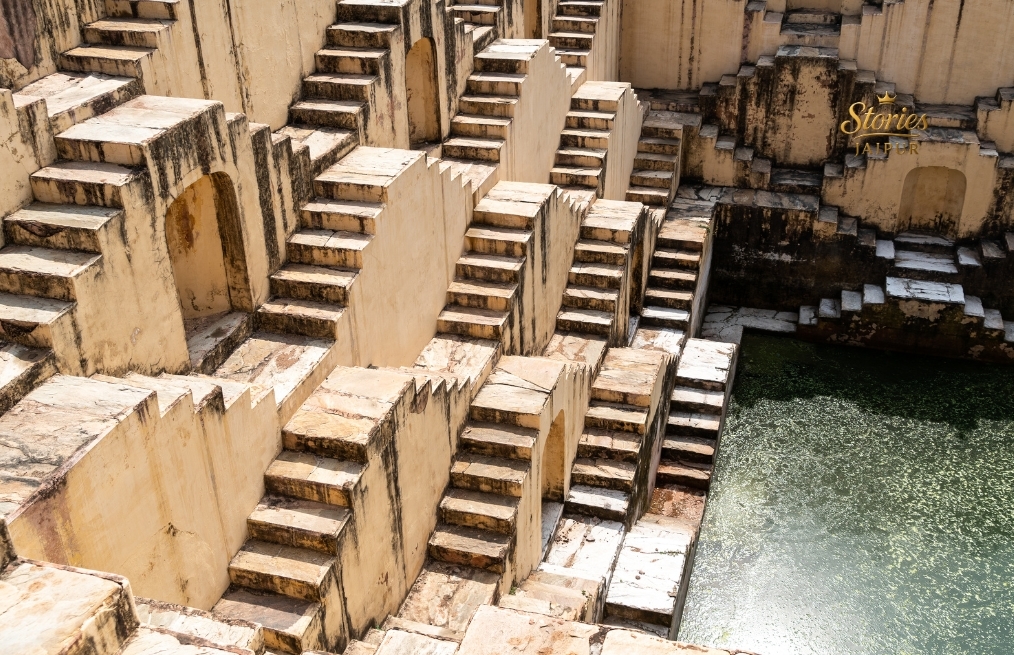
Hidden away in the ancient town of Amer, near Jaipur, lies the captivating Panna Meena ka Kund. This symmetrical marvel stands as a testament to India’s ingenious ancient water harvesting techniques. This remarkable stepwell, often overshadowed by its more famous neighbours like Amer Fort, is a serene oasis of architectural beauty and historical significance. Built in the 16th century, the Kund served as a vital community space, providing access to water throughout the year for locals, travellers, and even animals, reflecting the practical yet aesthetically rich approach to life in old Rajasthan. Today, it mesmerises visitors with its intricate crisscrossing staircases and tranquil atmosphere.
A Geometry of Serenity and Function
The design of Panna Meena ka Kund is a breathtaking display of geometric precision. Its most striking feature is the perfect symmetry of its octagonal shape, with four distinct sets of staircases descending to the water level. These staircases are arranged in a fascinating zigzag pattern, creating optical illusions and a unique visual rhythm. This ingenious design was not merely for aesthetic purposes; the zigzag steps made it challenging for invaders to quickly descend or ascend, adding a subtle layer of defence. More importantly, the multiple entry points allowed for the efficient management of crowds, ensuring that people could access water without congestion, even during peak times. The surrounding pavilions and balconies provided shaded resting spots for those collecting water or simply seeking respite from the sun.
Beyond a Well: A Community Hub
While its primary function was to collect and store rainwater, Panna Meena ka Kund also served as a vibrant community hub. It served as a gathering place for locals, where women would often socialise while fetching water, and men would discuss daily affairs. Its calm, shaded environment made it an ideal spot for locals to escape the scorching Rajasthani heat, especially during the summer months. The priests and sages also used the steps for their daily rituals and prayers, adding a spiritual dimension to the site. This integration of utility, social interaction, and spiritual practice is a hallmark of traditional Indian stepwells, making them more than just water sources.
Architectural Harmony with Nature
The construction of Panna Meena ka Kund demonstrates a profound understanding of the local geography and climate. Its location allows it to capture rainwater efficiently during the monsoon season, channelling it into a deep reservoir. The steps lead down to the fluctuating water level, ensuring access regardless of the water table. The use of local stone, meticulously cut and fitted, demonstrates the craftsmanship of the era. The small, arched niches and delicate carvings along the walls add subtle artistic touches that complement the grander geometric design, creating a harmonious blend of form and function. Lush greenery often surrounds the Kund, adding to its picturesque appeal and providing a stark contrast to the dry landscape of the region.
A Hidden Gem and Photographic Delight
Despite its proximity to the popular Amer Fort, Panna Meena ka Kund remains a somewhat hidden gem, offering a more tranquil and authentic experience than some of Jaipur’s more crowded attractions. Its architectural beauty and unique symmetry make it a favourite spot for photographers, who come to capture its mesmerising patterns and the play of light and shadow on its steps. While visitors are generally not allowed to descend into the stepwell due to safety and preservation concerns, the views from the upper levels are spectacular enough to appreciate its grandeur. Panna Meena ka Kund stands as a quiet yet powerful reminder of Rajasthan’s sophisticated water management systems and its timeless architectural heritage.
